Nose Job Cheongdam: Premium Clinics & 2026 Prices

Last Updated: April 2026  |  Reviewed by: Korea Medical Tourism Editorial Team

Based on consultations with multiple clinics across Gangnam and Apgujeong, the Cheongdam district has quietly become one of Seoul’s most sought-after destinations for rhinoplasty among international patients seeking both artistry and surgical precision. What surprises many first-time visitors is that South Korea performs more rhinoplasty procedures per capita than almost any other country in the world, with the Gangnam-Cheongdam corridor accounting for a significant share of those operations each year — a fact confirmed by data from the Korea Health Industry Development Institute.

Unlike the more commercialized strips of Gangnam’s main boulevard, Cheongdam-dong clinics tend to cater to a discerning clientele — including a growing wave of patients from Southeast Asia, North America, and the Middle East — who prioritize personalized surgical planning and natural-looking results over volume-based practices. A nose job in Cheongdam typically means longer consultation times, highly customized implant or cartilage graft planning, and surgeons who have trained in both Eastern and Western aesthetic standards. This guide breaks down everything international patients need to know before booking.

Clinical Perspective: A board-certified plastic surgeon practicing in Gangnam notes: “Cheongdam patients, especially those flying in from abroad, often come with more research done than local patients. They want to know the exact technique — open versus closed rhinoplasty, rib cartilage versus silicone — and they expect the surgeon to justify every decision. That level of engagement actually produces better outcomes because the surgical plan is more precisely tailored.”

Why Cheongdam Is a Premier Destination for Rhinoplasty

The Cheongdam Clinic Landscape

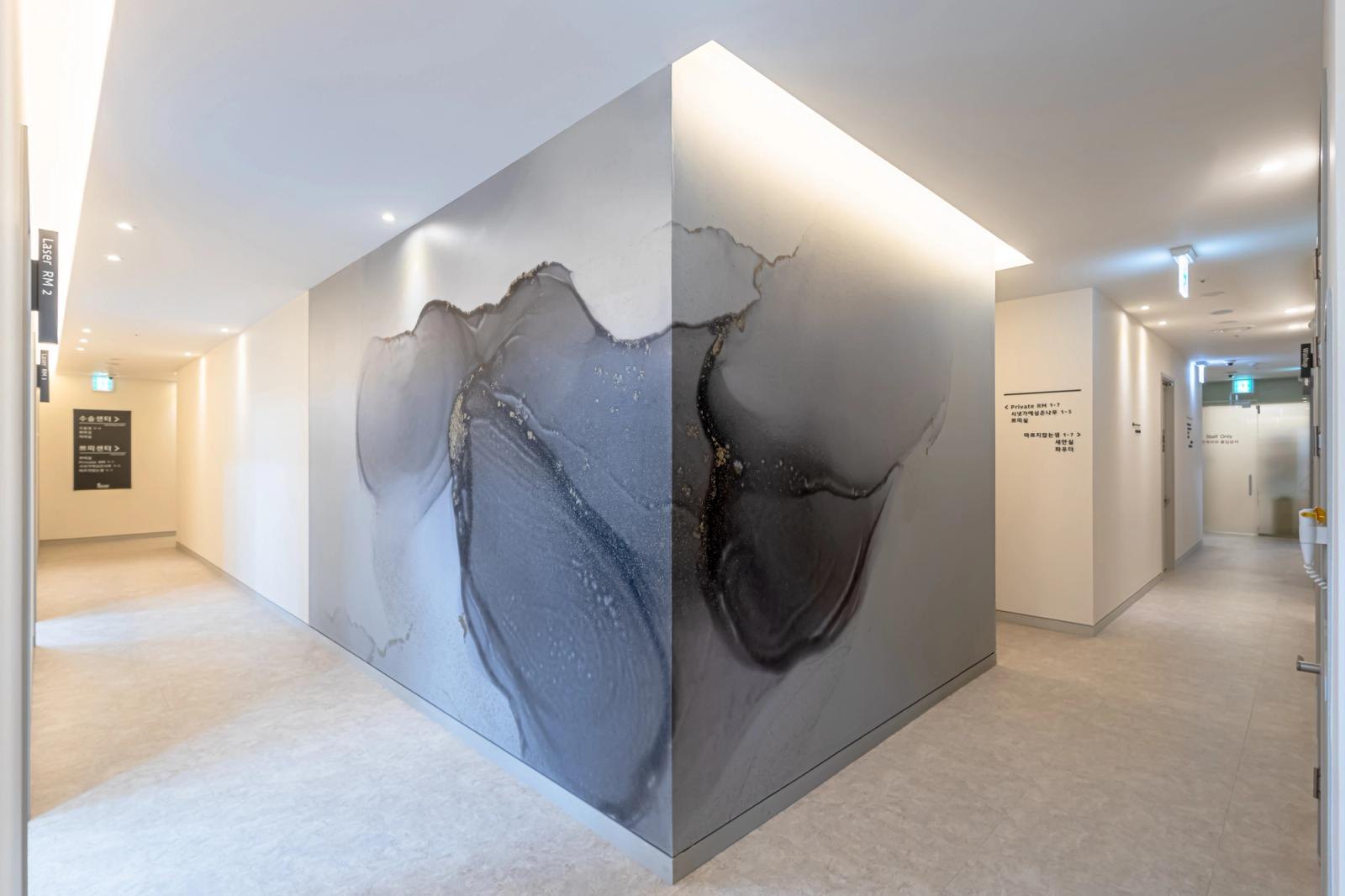
Cheongdam-dong sits adjacent to Apgujeong and forms the northern edge of Seoul’s luxury medical corridor. The clinics here are typically boutique-style, with fewer operating rooms but more senior surgeons per patient. Many board-certified surgeons who trained at major academic hospitals — including programs affiliated with institutions like Asan Medical Center — have established private practices in this neighborhood precisely because the patient base demands a higher standard of care. Facilities are often smaller and quieter than the mega-clinics found further south, and that intimacy is a deliberate choice.

Korean Rhinoplasty Techniques Available in Cheongdam

Most Cheongdam clinics offer a full spectrum of rhinoplasty techniques. Open rhinoplasty — where a small incision is made across the columella — remains the most common approach for foreign patients seeking significant structural changes, such as dorsal augmentation or tip refinement. Closed rhinoplasty, with all incisions inside the nostrils, is preferred for minor adjustments. For patients requiring more structural support, rib cartilage grafting has become increasingly popular as a safer long-term alternative to silicone implants, particularly among revision cases. Clinics in Cheongdam also commonly offer ethnic rhinoplasty specifically designed to enhance the nose while respecting Asian facial harmony — a nuance that the American Society of Plastic Surgeons increasingly recognizes as a distinct subspecialty requiring specific training.

Nose Job Cheongdam: Price Ranges for 2026

Primary Rhinoplasty Costs

Pricing for a nose job in Cheongdam is generally positioned at the premium end of the Seoul market, reflecting the level of surgeon experience and clinic infrastructure. Based on our direct research across multiple Cheongdam clinics, international patients should budget as follows for 2026. A basic closed rhinoplasty targeting tip refinement or minor dorsal work typically ranges from ₩3,000,000 to ₩5,000,000 (approximately USD 2,200 to USD 3,700). A comprehensive open rhinoplasty combining dorsal augmentation with tip reshaping using septal cartilage ranges from ₩6,000,000 to ₩10,000,000 (approximately USD 4,400 to USD 7,400). Procedures involving rib cartilage harvesting — considered the gold standard for structural rhinoplasty — typically start at ₩10,000,000 and can reach ₩18,000,000 or more (approximately USD 7,400 to USD 13,300) depending on complexity.

Revision Rhinoplasty Pricing

Cheongdam is particularly well-regarded as a destination for revision rhinoplasty — corrective procedures for patients who had previous surgeries elsewhere, including abroad. Revision cases are inherently more complex and time-intensive, and pricing reflects that reality. Expect revision rhinoplasty in Cheongdam to start at ₩12,000,000 (approximately USD 8,900) and potentially exceed ₩25,000,000 (approximately USD 18,500) for highly complex reconstructive work involving implant removal and full structural rebuilding with autologous cartilage. These prices generally include anesthesia and at least one post-operative follow-up visit but may not cover translation services, airport pickup, or accommodation — all of which Cheongdam clinics increasingly offer as bundled packages for international patients.

Recovery Timeline and What to Expect

Immediate Post-Operative Phase (Days 1–7)

Following a nose job in Cheongdam, patients are typically discharged the same day or after one night of clinic observation, depending on anesthesia type and procedural complexity. A nasal splint is applied and worn for seven to ten days. Significant swelling and bruising around the eyes and nose are normal during this window, and most clinics advise against strenuous activity, alcohol consumption, and sun exposure. Pain is generally manageable with prescribed oral analgesics, and clinics consistently report that patients rate discomfort as moderate rather than severe.

Weeks 2–4: Returning to Daily Life

By day ten to fourteen, the splint is removed and most patients feel comfortable appearing in public, though residual swelling remains. International patients who need to fly home within two weeks of surgery should discuss this timeline explicitly during consultation — most Cheongdam surgeons recommend remaining in Seoul for at least ten to fourteen days to attend the splint removal appointment and an early post-operative check. By the end of week four, bruising is fully resolved for the majority of patients and initial results become visible, though the nose continues to refine over the following six to twelve months as deeper swelling gradually subsides.

What to Know Before You Book

Clinics we contacted confirmed that virtual consultations are now standard practice for international patients, with most Cheongdam clinics offering video calls with the operating surgeon — not just a coordinator — at no charge. Based on our research across multiple Gangnam clinics, you should always verify that the surgeon who conducts your consultation is the same surgeon who will perform your operation; some higher-volume clinics delegate surgery to junior doctors without disclosing this clearly. Clinics we spoke with also emphasized that patients should bring or prepare a comprehensive photo record of their nose from multiple angles, as this significantly improves the accuracy of pre-surgical 3D simulation. International patients should also confirm whether post-operative follow-up care is included in the quoted price or billed separately — Cheongdam clinics tend to be more transparent about this than others, but it is always worth asking explicitly. Finally, based on our research, patients with a history of previous rhinoplasty should always disclose this upfront during the initial inquiry, as it changes the consultation process, the surgical timeline, and the overall cost estimate significantly.

Frequently Asked Questions

How is a nose job in Cheongdam different from other parts of Seoul?

Cheongdam clinics are generally characterized by a more premium, boutique experience compared to the higher-volume clinics found on Gangnam’s main streets. Surgeons in Cheongdam typically see fewer patients per day, allowing for more individualized consultation and surgical planning. The price point is correspondingly higher, but many international patients find the additional cost worthwhile for the level of personalization involved.

How long should I plan to stay in Seoul for a nose job in Cheongdam?

Most Cheongdam surgeons recommend a minimum stay of ten to fourteen days for international patients. This allows for the pre-operative consultation, the procedure itself, the splint removal appointment around day seven to ten, and at least one follow-up check before departure. Some complex cases — particularly revisions — may require a longer stay of up to three weeks.

Is anesthesia included in Cheongdam rhinoplasty prices?

In most cases, yes — the quoted price at Cheongdam clinics typically includes general anesthesia or IV sedation administered by a dedicated anesthesiologist. However, you should confirm this explicitly during your consultation, as some clinics list a base surgical fee that excludes anesthesia costs. Always request an itemized breakdown of your quote before signing any consent or payment agreement.

Can I get a nose job consultation in English at Cheongdam clinics?

Yes. The majority of clinics in the Cheongdam area that actively serve international patients employ dedicated medical coordinators fluent in English, and many also offer coordination in Mandarin, Japanese, Thai, and Arabic. Some clinics provide in-person interpreter services during the surgical consultation itself. It is advisable to test communication quality during your initial virtual inquiry before committing to a clinic.

What is the difference between silicone implants and rib cartilage in Korean rhinoplasty?

Silicone implants are commonly used in Korea for dorsal augmentation and offer predictable shape outcomes with a shorter recovery. Rib cartilage grafts, harvested from the patient’s own body, are considered more natural, carry no risk of implant-related complications, and are strongly preferred for revision cases or patients requiring significant structural rebuilding. Many Cheongdam surgeons will recommend rib cartilage for patients with a history of previous rhinoplasty or those seeking long-term durability over shorter surgical time.

Are nose job results in Cheongdam permanent?

Rhinoplasty results are considered long-lasting but not always entirely permanent. Structural changes to bone and cartilage are largely permanent, while soft tissue can continue to change slightly over years. In cases involving silicone implants, revision may be needed in the long term due to implant shift or capsular changes. Autologous cartilage-based results tend to be more stable over the lifetime of the patient.

Related Articles

If you found this guide helpful, you may also want to read our detailed breakdown of Nose Job in Gangnam: Complete Guide for International Patients, our comprehensive overview of Nose Job Cost in Seoul: 2026 Price Guide, and our in-depth look at Revision Rhinoplasty in Seoul: What You Need to Know. For patients in the planning stages, our guide on 3D Simulation Before Rhinoplasty in Seoul is also highly recommended reading before your first consultation.

Medical Disclaimer: This article is for informational purposes only and does not constitute medical advice. Always consult a qualified healthcare professional before undergoing any medical procedure. Individual results and recovery times may vary.
About This Guide: Researched and written by the editorial team at Nose Job Seoul, a resource dedicated to helping international patients navigate Korea medical tourism with accurate, up-to-date information sourced from official Korean health authorities and direct clinic consultations.

Leave a Comment